
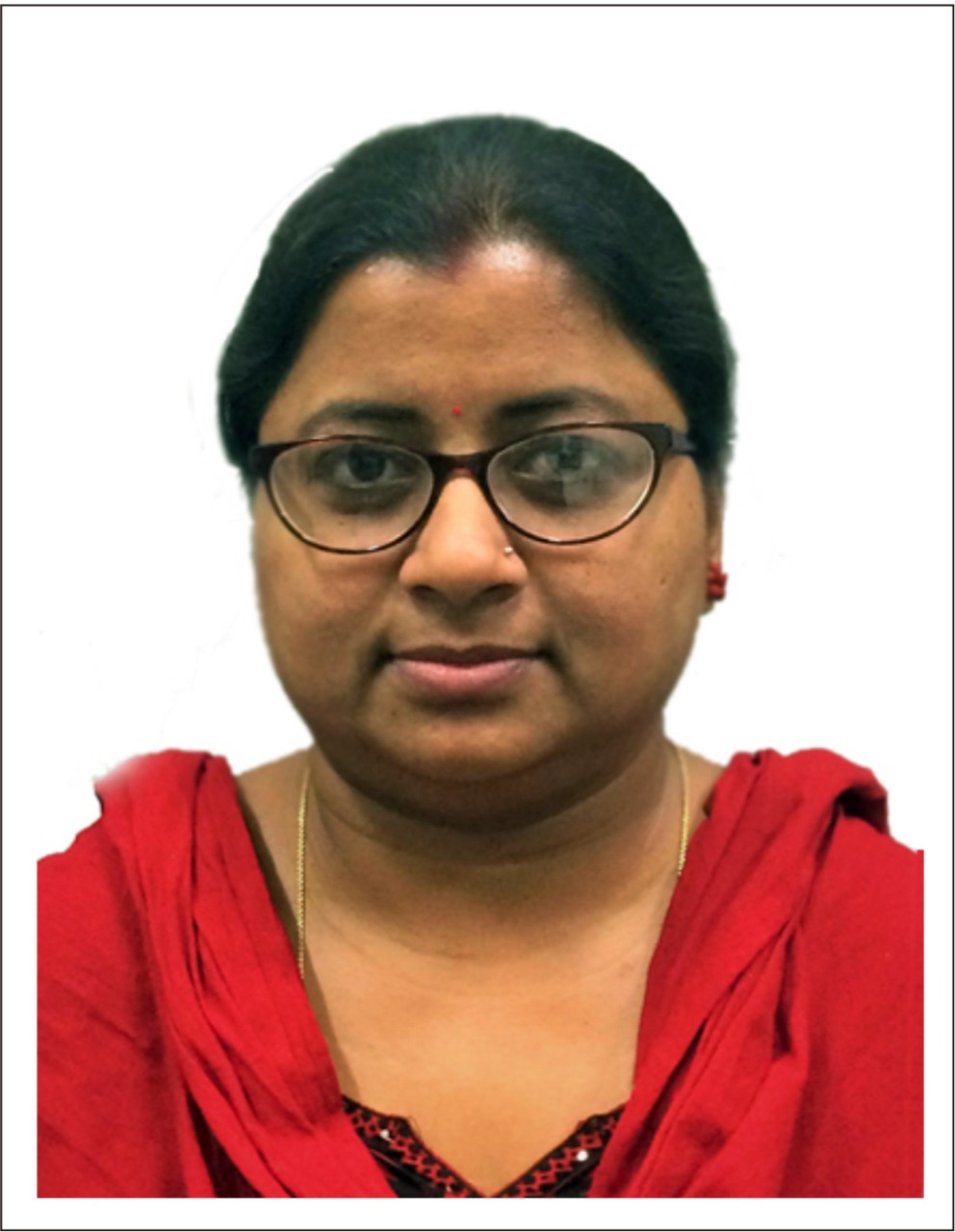
Academic Information
Ph.D, IIT(ISM) Dhanbad
Research Areas
Research Interests
My research interests lie in the interdisciplinary areas of Internet of Things (IoT), data science, and machine learning, with a focus on developing intelligent and secure sensing systems. I am particularly interested in modified sensor design and smart sensors for efficient data acquisition, monitoring, and control in real-time applications. I explore the use of machine learning techniques to improve sensor performance, accuracy, and predictive capabilities. Additionally, my work includes cryptography-based security solutions to ensure data integrity, privacy, and secure communication in IoT-enabled systems, aiming to build reliable, scalable, and robust smart technologies.
Courses Taught
Positions Held
Publications
[1] Mahapatra, R. D., Chakraborty, M., Bhattacharya, S., Kundu, A., & Mukherjee, M. (2026). Design and Analysis of the Electro-optical Characteristics of Super-lattice Structure based ZnO/MGRL PIN photodetector using Random-Forest-Regression model for Detection of Photon in UV wavelength. Engineering Research Express. https://doi.org/10.1088/2631-8695/ae3a42
[2] Chakraborty, M., Sadhu, P. K., &Bera, S. K. (2024). Further study on linearization of echo intensity sensing type ultrasonic liquid level transducer. Microsystem Technologies, 31(7), 1725–1736. https://doi.org/10.1007/s00542-024-05771-3
[3] Chakraborty, M., Sadhu, P. K., Kundu, A., & Mukherjee, M. (2024). Strain engineered < Si/Si0.97C0.03 > superlattice photodetector for optoelectronic applications: a comprehensive numerical analysis and experimental verification. Journal of Computational Electronics, 23(5), 1111–1124. https://doi.org/10.1007/s10825-024-02209-x
[4] Bera, S. K., Chakraborty, M., & Sadhu, P. K. (2024). A modified linear capacitive displacement transducer for any range. Heliyon, 10(20), e38983. https://doi.org/10.1016/j.heliyon.2024.e38983
[5] Chakraborty, M., Sadhu, P. K., & Kumar, B. (2023). Study of a non-contact opto-electronic liquid level transmitter for a conducting liquid using MZI technique. Microsystem Technologies, 29(4), 621–633. https://doi.org/10.1007/s00542-023-05431-y
[6] Paul, D., Sarkar, M., Chaudhuri, A. K., Das, S., &Chakraborty, M. (2023). Prediction of death rate among COVID-19 patients in the age group of 10 to 19 yrs. using machine learning. International Journal of Engineering Technology and Management Sciences, 7(2), 302–308. https://doi.org/10.46647/ijetms.2023.v07i02.036
[7] Mondal, S., Ghosh, U., Das, S., Chaudhuri, A. K., &Chakraborty, M. (2022). Prediction of dependency of crime rate on level of migrant population using Machine Learning. IJARCCE, 11(3). https://doi.org/10.17148/ijarcce.2022.11342
[8] Chakraborty, M., & Jana, B. (2020). Impact of COVID-19 on Cyber Security Threat Landscape in New Reality. Journal Article.
[9] Jana, B., Chakraborty, M., Mandal, T., &Kule, M. (2018). An overview on security issues in modern cryptographic techniques. SSRN Electronic Journal. https://doi.org/10.2139/ssrn.3173527
[10] Jana, B., Chakraborty, M., &Mandal, T. (2018). A task scheduling technique based on particle swarm optimization algorithm in cloud environment. In Advances in intelligent systems and computing (pp. 525–536). https://doi.org/10.1007/978-981-13-0589-4_49